.svg)
Maths, Words Not Squiggles is a tutoring business for children aged 4-18, with four learning centres across Sydney suburbs.

The client had an online portal for parents. They believed there were usability issues preventing people from using it, however parents raised some different pain points in our user interviews:
We started the project by delving deeper into understanding the parents of school-aged children, and what their key goals and motivations might be when signing their kids up for a tutoring service. We spoke to 4 parents who use Maths, Words Not Squiggles, as well as three parents who were not currently using after-school tutoring but may consider it in the future. We pooled our research with fellow UX designers across 12 parent conversations in order to synthesise our findings.
Some key themes stood out:
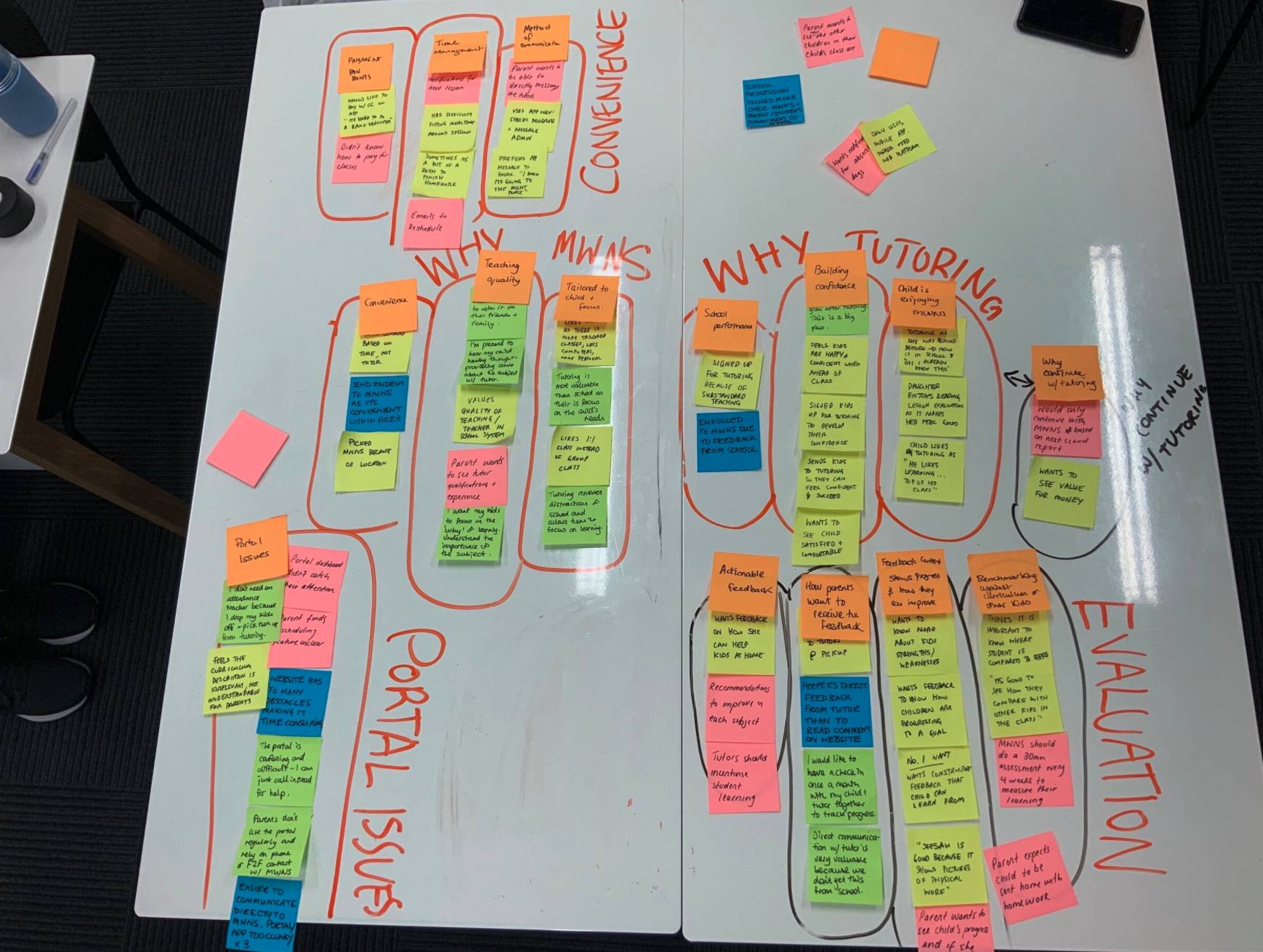
From talking to parents we identified three key areas of opportunity for Maths, Words Not Squiggles to develop further within their online portal:
Rescheduling lessons was a moderate pain point, however many parents didn’t need to do this very often, or were happy to call up to manage this if needed.
We felt that the ability to track progress and have more meaningful discussions with the tutor were more important features not only to parents, but also to develop trust and value in Maths, Words Not Squiggles service.
.png)
Through the research and identifying the key pain points of parents using the tutoring service, we developed two key user personas. Hannah (persona 1) just wants her daughter Aurelia to feel more confident in her schoolwork. She really values talking to her tutor after the class and wishes there were more opportunities to do this.
.png)
Jen (persona 2) chose Maths Words Not Squiggles because wants her son Sam to keep up with his classmates, but finds the online curriculum tracker confusing.
.png)
After synthesising our research and developing personas to understand our users better, we were ready develop a prototype with some potential improvements for the company. We tested the prototype with 4 parent users, focusing on developing out a dashboard for parents to be able to quickly gain insights on student progress. We identified the following:
The structured format of the feedback report was received well. Parents appreciated this as currently they were not experiencing any consistency in the length and content from different tutors.
What was wrong:
How we fixed it:
What was wrong:
How we fixed it:
A second iteration tested well with participants, in particular:
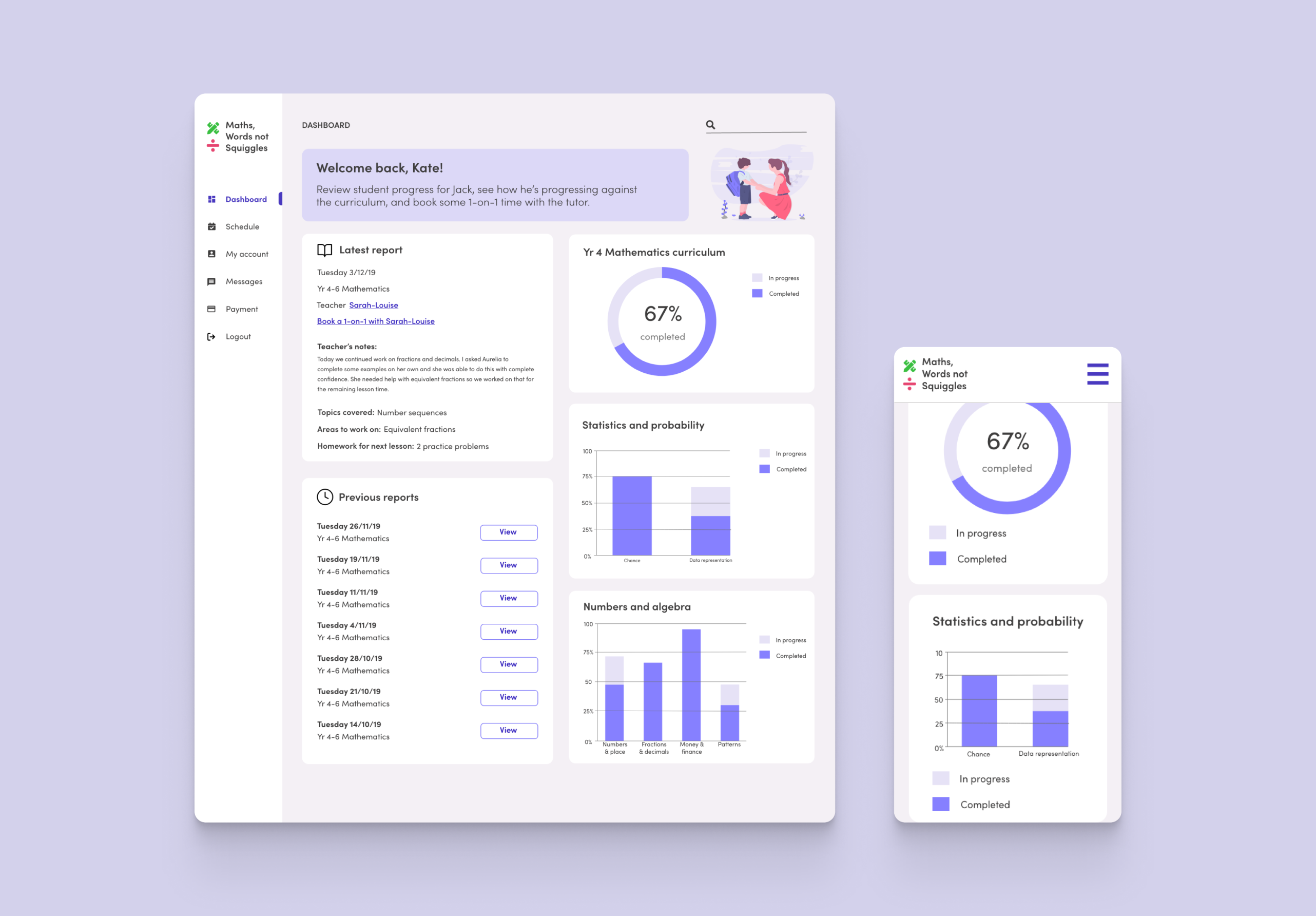
Whilst the founder and owner of the business was initially focused on the shortcomings of the portal in relation to admin tasks, parents were actually more concerned with how their child was progressing, and having meaningful conversations with their child’s tutor.
Delving deeper with parents was eye opening - they all saw the value of tutoring beyond not only academic achievements, but how it grew their child’s confidence and ability to manage school more holistically.
There are still more opportunities to improve the online portal further through usability enhancements to rescheduling and invoicing, to meet the needs of parents and to drive further efficiencies and growth of Maths, Words Not Squiggles.